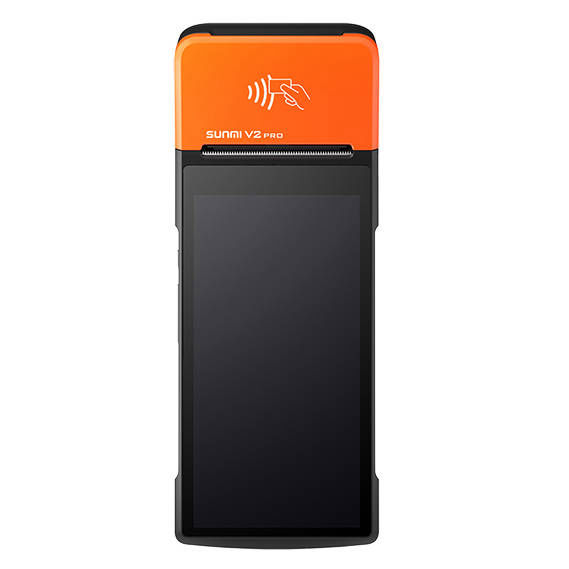
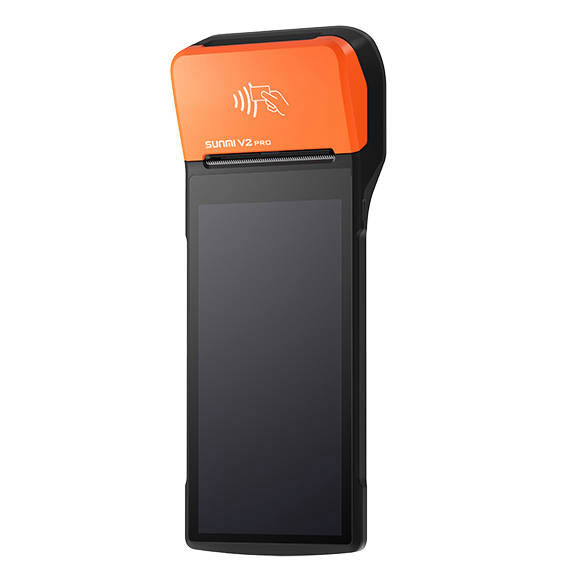
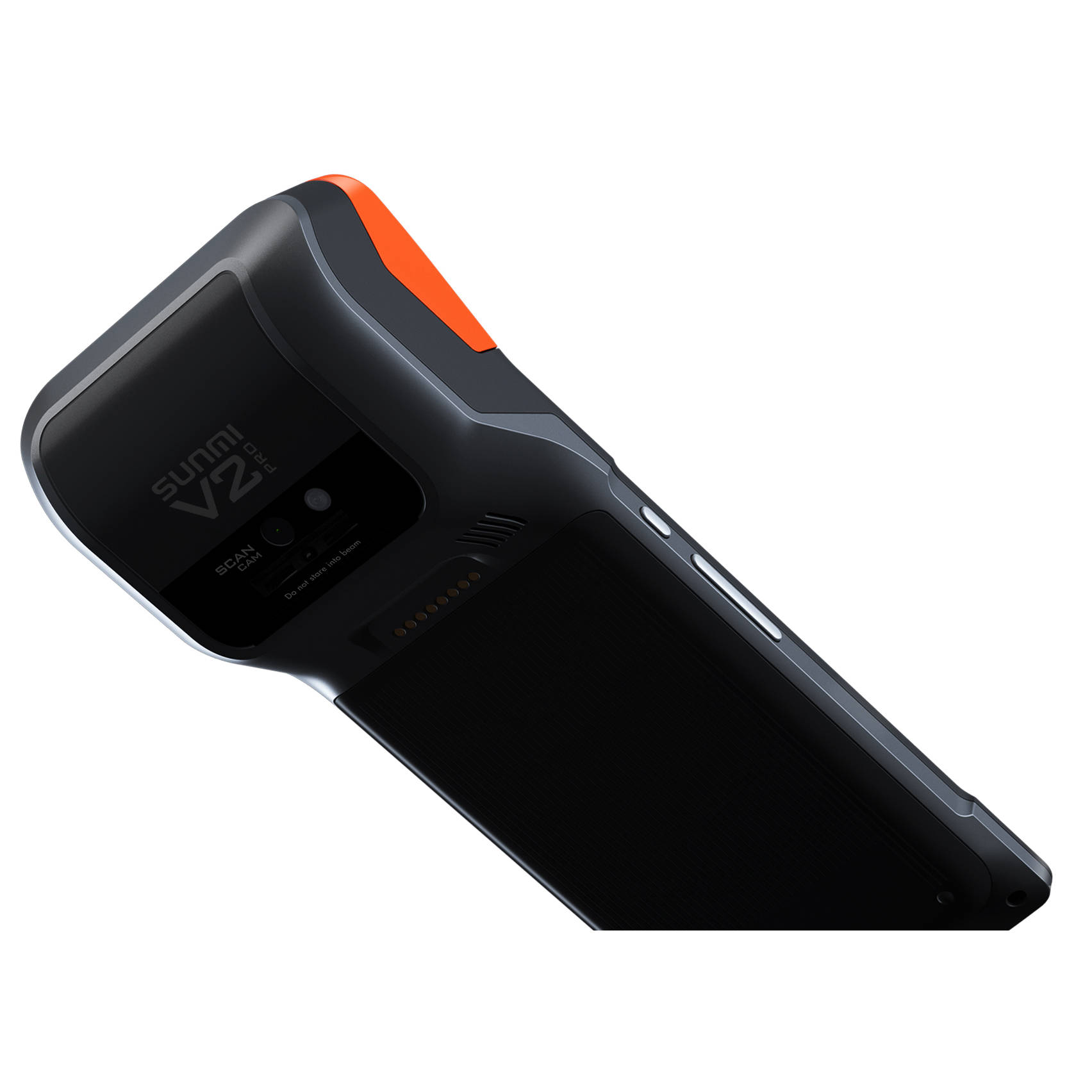
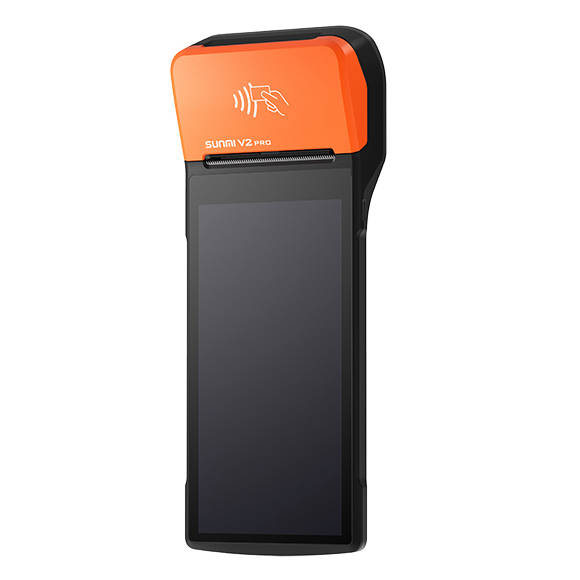
Such a mobile POS terminal was not here yet.
The first mobile POS terminal with a 5.94-inch
HD display will make your life simple. Sunmi
V2 Pro is an ultra-slim concept with only
13 mm at its narrowest point.
The Sunmi V2 Pro is produced
also in the Label print version,
which allows printing self-adhesive
labels and additionally contains
professional 2D scanner.
With a top-of-the-line design and
ergonomic body, it fits perfectly
into your pocket.
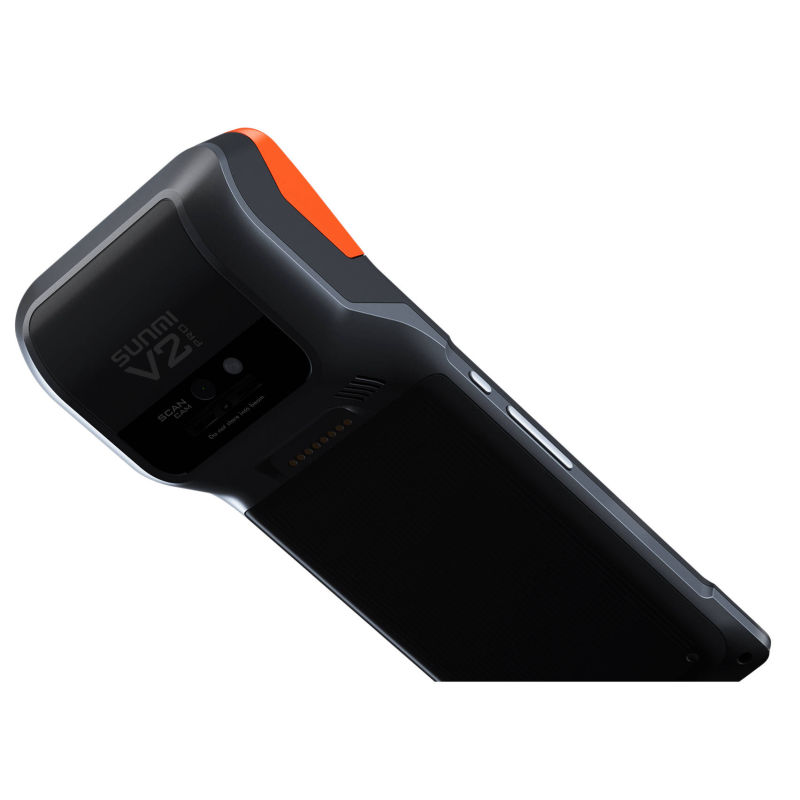
With the anti-slip rear cover, it will never
fall off the table and even if, the double
casing will reduce the impact strength.
The only wider location is the part where the thermal printer is located, with the possibility of fast printing of receipts. With NFC technology, you can build your customer network and loyalty programs.
The equipment includes high quality rear camera
and professional 1D scanner (label version
contains 2D scanner). USB-C poer is suitable
for charging or connection external devices.
Sunmi V2 Pro works with Android 7.1 OS.
Beyond technical risks, the legal landscape has become increasingly hostile toward unsolicited outreach. Regulations like the General Data Protection Regulation (GDPR) in Europe and the CAN-SPAM Act in the United States set strict ground rules for consent. GDPR, in particular, requires "opt-in" consent that is freely given and specific. Because individuals on a purchased list never gave your specific business permission to contact them, using such a list often constitutes a direct violation of privacy laws, carrying the risk of heavy fines and legal action.
The Illusion of Shortcuts: The Risks and Realities of Buying Email Lists buy email mailing list
In the high-stakes world of digital marketing, the pressure to scale quickly often leads businesses toward a tempting shortcut: purchasing a pre-made email mailing list. On the surface, it looks like an efficient way to bypass the slow, organic process of lead generation. However, a closer look at the technical, legal, and strategic implications reveals that buying email lists is rarely a shortcut to success; more often, it is a fast track to brand damage and technical blacklisting. Beyond technical risks, the legal landscape has become
In conclusion, while the prospect of an instant audience is alluring, the "buy email list" strategy is fundamentally flawed. The combination of deliverability issues, legal liability, and brand alienation makes it a high-risk, low-reward endeavor. For a business to see long-term growth, it must invest in the slower, more disciplined path of earning its audience's attention rather than trying to buy it. Because individuals on a purchased list never gave
The primary issue with purchased lists is the quality of the data. Email lists are often compiled through scraping or outdated databases, meaning they are frequently riddled with "dead" accounts, typos, and—most dangerously—spam traps. Spam traps are email addresses used by internet service providers (ISPs) specifically to catch unsolicited senders. When a business sends a blast to a purchased list, hitting even a single spam trap can immediately flag their domain as a source of spam, causing future emails to legitimate customers to be blocked or diverted to junk folders.
From a strategic standpoint, email marketing relies on the strength of the relationship between the brand and the recipient. When a user receives an email from a company they don’t recognize, the psychological response is one of intrusion rather than interest. High "mark as spam" rates and low open rates are the hallmarks of purchased lists. This doesn't just result in poor ROI; it actively erodes brand trust. A company that begins its relationship with a customer by invading their inbox uninvited creates a negative first impression that is difficult, if not impossible, to reverse.

+420 725 325 271
+420 725 913 535
sunmi@satomar.cz
www.sunmi.cz/en
Satomar, s.r.o.
IČ: 29201586
DIČ: CZ29201586
Karlova 37
614 00 Brno
Czech Republic